
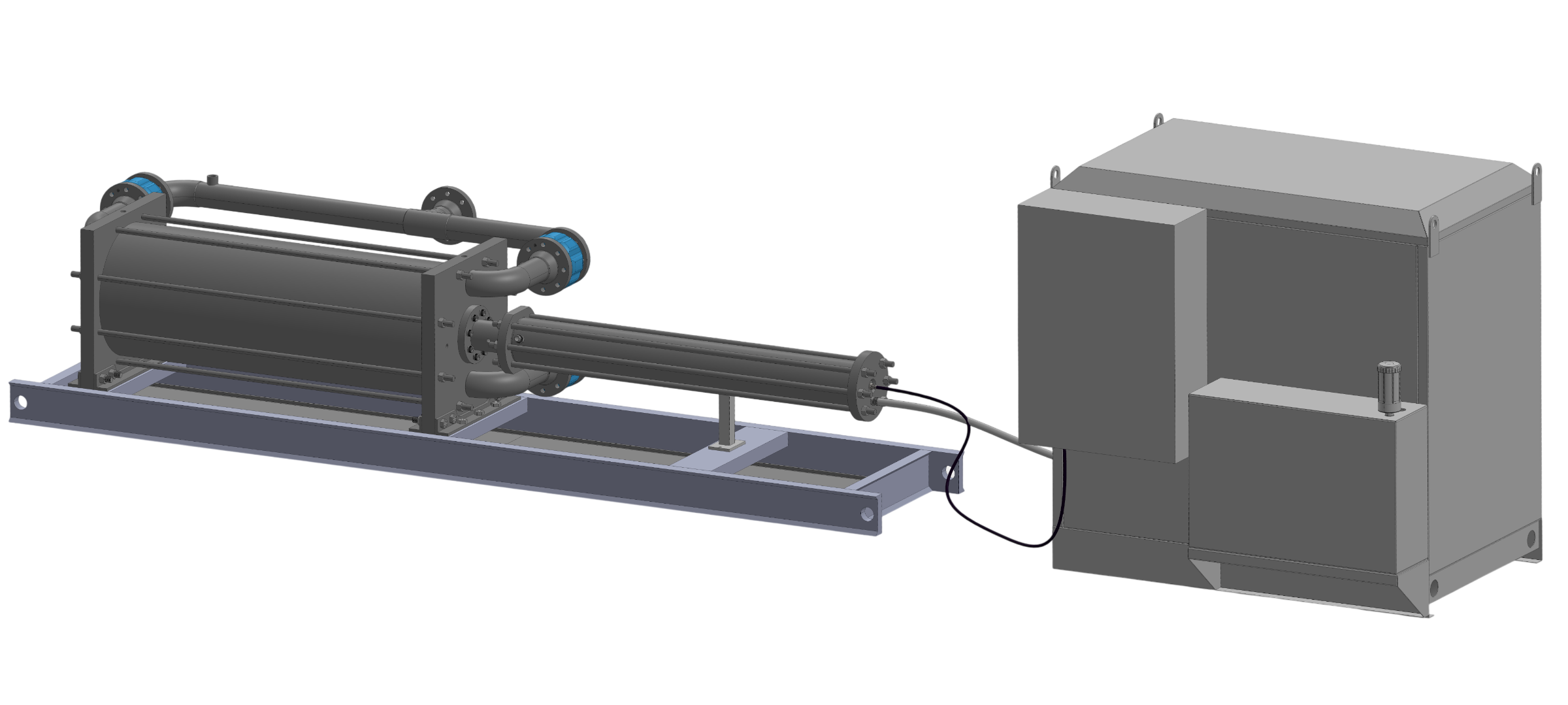
Engineered for real multiphase conditions.

Fluidstream’s multiphase platform is engineered for the variable, unstable, and liquid-rich conditions encountered in real-world multiphase service.

Why it matters

Separation-first systems create cost, footprint, and reliability penalties.

Conventional surface design usually assumes the stream must be cleaned up before compression. That means more separators, tanks, scrubbers, interconnections, controls layers, and maintenance points. Every added component increases capital cost and expands the number of things that can trip, leak, plug, or fail.

More equipment to protect the compressor Extra hardware is often installed because the compressor itself is not comfortable with liquid carryover, solids, or unstable flow.
Higher lifecycle burden More equipment count means more installation work, more inspection, more parts, and more operating complexity over time.
Less flexibility under real conditions When the stream changes, conventional gas-only assumptions can turn into trips, downtime, and intervention.
A different approach

Fluidstream is designed to move production without depending on ideal upstream conditioning.

The Fluidstream approach changes the role of compression in the system. Instead of forcing the production stream through a long chain of equipment just to protect the compressor, the machine is designed to tolerate and manage the reality of mixed-phase flow inside the compression process. That simplifies infrastructure and expands where multiphase technology can be practical.

Reduced equipment count

Lower footprint and fewer interconnections compared with separation-heavy facilities.

Stronger uptime potential

Designed to keep performing through variable gas-liquid ratios and non-steady-state events.

Better emissions capture

Supports recovery of gas that might otherwise be vented or flared when conventional systems become unreliable.

Inside the Technology

See where the technology advantage is built into the system

Fluidstream technology unit
Core technology features

Expanded technical detail for each major technology advantage.

Each feature below explains how the technology works, the field problem it addresses, and the practical operating benefit it delivers.

Liquid handling methodology

Patent-focused methodology for handling incompressible liquids.

The technology story starts here: Fluidstream is not trying to avoid liquid presence at all costs. It is designed around the fact that liquids can enter the compression process and must be handled in a controlled, credible way.

Patent reference: US11098709B2 supports this liquid-aware compression methodology and links directly to Fluidstream’s approach to chamber response under multiphase conditions.

Why it matters technically

In conventional compression, liquids are treated as a threat that must be removed before the machine can run safely. That assumption drives the need for scrubbers, separators, and additional process steps. Fluidstream’s methodology changes that architecture by designing for liquid presence inside the compression chamber. This is a more realistic fit for vapor recovery streams, casing gas with carryover, and multiphase production services where liquid breakthrough is not an exception but part of the normal operating envelope.

By handling incompressible liquids inside the compression process, the system can reduce dependence on separation hardware as the only line of defense. That does not just simplify the facility. It also changes the reliability story, because the machine is not destabilized every time the field behaves like a field instead of a clean laboratory stream.

Built for mixed flow conditions Supports operation where gas, liquids, and transient slug behavior are part of real service.
Less reliance on upstream cleanup Helps reduce the amount of equipment required to protect a gas-only compressor from liquid carryover.
Broader application range Improved economics can make multiphase deployment practical in more wells, pads, and facility scenarios.
Stronger field realism The design philosophy starts from real production variability instead of idealized process assumptions.
Real-life benefit Operators gain a production-moving solution that remains useful when liquid carryover, changing gas-liquid ratios, or unstable inflow would otherwise force a conventional system into trips, workarounds, or additional facility spend.
Advanced sealing system

Patent-pending gland sealing with electronic wear detection.

Sealing performance is one of the most consequential reliability issues in multiphase compression. Fluidstream addresses it as a central technology layer, not as an afterthought.

Why it matters technically

Mixed-phase service is hard on sealing systems because the machine must tolerate not only pressure differential and cycle loading, but also contaminants, liquid exposure, and changing process behavior. Fluidstream’s gland sealing configuration is paired with electronic wear detection so the operator has visibility into seal condition before sealing degradation turns into a leak event, an emergency intervention, or an extended outage.

This matters because predictive awareness is often more valuable than simply having a durable seal on paper. In field operations, downtime is rarely caused by a single weak component in isolation. It is caused by a lack of warning, a reactive maintenance pattern, and the inability to plan service before a problem becomes operationally expensive.

Wear visibility Electronic detection improves awareness of seal condition before failure becomes disruptive.
Improved maintenance planning Helps shift service from reactive troubleshooting toward scheduled intervention.
Better reliability in harsh duty Supports sustained operation under demanding multiphase conditions where sealing is a common weak point.
Lower leak exposure Stronger sealing integrity helps reduce one of the highest-concern failure modes in multiphase equipment.
Real-life benefit Instead of discovering a seal problem only after leakage, downtime, or emergency service, operators gain earlier warning and a better chance to protect uptime, maintenance budgets, and site safety performance.
Containment and mechanical integrity

Sealed hazardous-fluid containment and alignment in critical wear areas.

Reliability in multiphase service is not only about what the machine compresses. It is also about how the machine holds alignment, controls wear, and contains the fluid in the areas where failure risk is concentrated.

Why it matters technically

Mechanical integrity and complete containment are essential for reliable operation in harsh multiphase compression environments. Without robust sealing and precise structural control, stresses from liquid slugs, vibration, and pressure fluctuations accelerate wear on seals and bearings. This degradation increases the likelihood of process fluid leaks, unplanned maintenance, and reduced equipment life. Fluidstream’s design minimizes these risks by engineering a fully contained gland system with controlled load paths in critical wear zones, reducing vibration and stress concentrations that cause premature component failure.

This approach is especially important when the fluid stream contains corrosive species such as H₂S, when facilities are remote with high intervention costs, or where even small seal breaches could disrupt production or compromise safety.

Hazardous-fluid containment Supports safer operation in services where exposure to corrosive or toxic fluids is a real design concern.
Alignment control Helps preserve seal life and reduce mechanically induced wear in critical load paths.
Longer component life Wear control in stressed areas helps extend intervals between service events and part replacement.
Durability under demanding duty Improves survivability when field conditions are corrosive, unstable, or maintenance access is limited.
Real-life benefit The operator is not only purchasing compression capacity but also investing in a machine architecture designed to remain sealed, stay aligned, and maintain productivity in harsh service environments where intervention costs are high.
Piston tracking and adaptive operation

Full piston tracking for optimized control and upset protection.

Real field equipment is rarely exposed to perfectly steady operating conditions. Controls must respond to what the machine is experiencing, not just what the process was expected to be.

Why it matters technically

Full piston tracking helps prevent damage from ice and solids buildup, optimizes power fluid temperature, and adjusts the system for upset conditions such as slugs. It is a core part of the machine’s protection strategy. Tracking piston behavior gives the control system better operating context, allowing the unit to respond to harmful conditions before they cascade into mechanical stress, poor efficiency, or instability.

This is particularly relevant in multiphase services because the most expensive failures often do not begin with a catastrophic event. They begin with changing behavior: higher loads, altered motion, unstable response, and increasingly unfavorable operating conditions that go unmanaged for too long.

Upset response Supports operational adjustment when slugs, solids buildup, or transient events begin to affect the machine.
Protection against damage modes Helps reduce risk from ice formation, solids accumulation, and other non-ideal operating behavior.
Optimized operating envelope Improves the system’s ability to remain controlled as conditions change instead of relying on a narrow design point.
More credible autonomy Autonomous performance is stronger when the controls have better real-time awareness of machine behavior.
Real-life benefit In the field, this means less dependence on constant manual tuning and a better chance of staying online through the conditions that normally create trips, damage, and operator frustration.
Drive systems and controls

Electric standard, gas drive optional, fully integrated into autonomous controls.

Deployment flexibility only becomes valuable when it does not compromise control quality. Fluidstream links the drive options back into the operating logic so the system remains coherent under different field constraints.

Why it matters technically

Fluidstream offers both electric and gas-drive configurations, but the more important point is that critical gas-drive operating data such as oil temperature, rpm, and motor load are integrated into the control system. That means the drive package is not treated as a separate black box. It becomes part of the system’s protective intelligence and operating strategy.

This is a practical advantage in remote and infrastructure-limited deployments where available power can shape the entire project. Operators often need a solution that can work with site realities without sacrificing the automation and protection needed for reliable performance.

Deployment flexibility Supports both electric-powered and gas-driven field installations depending on site constraints.
Integrated operating data Drive information is used by the controls rather than left disconnected from system logic.
Better performance under variable fuel quality Control integration helps the unit remain functional even when fuel gas quality is not ideal.
Reduced operator burden Autonomous logic supports reliable operation without requiring constant manual attention or intervention.
Real-life benefit Operators can deploy the technology in more places, including sites without ideal electric infrastructure, while still keeping the control quality and protection logic needed for serious field service.
Sand-ready sealing

Multiphase piston and gland sealing configured to optimize life in sand service.

Abrasive service is where many technologies stop sounding robust and start showing their limitations. Fluidstream explicitly addresses survivability in sand-bearing applications.

Why it matters technically

Sand and other abrasive solids accelerate wear in sealing surfaces, moving interfaces, and other mechanically sensitive areas. A technology that claims to be multiphase-capable but assumes a clean stream is still vulnerable where the field is dirtiest. Fluidstream’s multiphase piston sealing and gland sealing approach is configured to optimize life under abrasive service, reinforcing that the machine is intended for real operating conditions rather than idealized cases.

That matters not only for equipment life but also for economics. Abrasive wear does not just consume parts. It creates more frequent shutdowns, more service visits, and more uncertainty around operating continuity. Designing for sand service helps protect the economic case for the technology in wells and facilities where conventional assumptions break down fastest.

Abrasive-duty survivability Sealing philosophy is configured with solids-bearing service in mind, not as an after-the-fact tolerance claim.
Optimized seal life Targets one of the first areas to degrade when abrasive material is present in the stream.
Stronger suitability for difficult wells Supports applications where sand, contaminated fluids, and unstable production conditions coexist.
Improved lifecycle economics Lower wear intensity can reduce service frequency and help preserve uptime.
Real-life benefit The technology is better positioned for the wells and facilities that are hardest to keep online, where abrasive solids can quickly erase the economics of a less field-ready design.

Technology Platform

The engineering basis behind Fluidstream’s multiphase capability.

Fluidstream’s platform is built around the operating realities of multiphase service: liquids, slugs, changing flow, seal wear, solids, and pressure instability.

01 / Core Differentiator

Incompressible-liquid response methodology

A key challenge in multiphase compression is not simply the presence of liquids. It is how the system responds when incompressible liquid enters the compression chamber.

Fluidstream’s operating methodology is designed to manage liquid-influenced chamber behavior instead of relying on conventional gas-only assumptions.

Supported by U.S. Patent No. 11,098,709 B2 for adaptive chamber operation in response to incompressible liquids.
Supports reliable operation in liquid-rich, slugging, and unstable multiphase applications.
02 / Phase Handling

Direct multiphase chamber handling

Field production does not remain in one clean gas-only condition. Liquid-dominant, gas-dominant, and mixed-phase operation can be handled inside the compression process rather than treated as an upstream separation problem.

Supports operation across the full operating spectrum from 100% liquid to 100% gas.
03 / Modulation

Hydraulic output control without VFD dependency

Full-range output modulation is achieved through the hydraulic operating architecture, allowing the system to respond across changing operating conditions without relying on variable frequency drive complexity.

Supports broad operating flexibility with simplified electrical requirements.
04 / Automation

Autonomous setpoint-based pressure control

Operators define a target pressure and the control system automatically modulates operation to maintain that target as flow, liquid content, slugs, and pressure conditions change.

Supports low-touch operation across variable field conditions.
05 / Sealing

Patent-pending contained gland sealing

Fluidstream’s gland sealing is part of a broader mechanical integrity system built around contained operation, strong alignment, reduced routine process-fluid leakage, and reduced operator exposure in multiphase service.

Designed to reduce operator intervention and seal-maintenance burden.
06 / Monitoring

Electronic seal-condition detection

Seal-wear detection adds condition awareness to the mechanical sealing system and supports proactive maintenance planning before seal condition becomes a field reliability issue.

Supports planned service visibility for remote and unmanned applications.
07 / Field Conditions

Designed for solids, sand, and harsh environments

Real production streams can include sand, solids, liquids, freeze-prone conditions, and unstable flow. Fluidstream is designed for field realities that conventional gas-only systems often struggle to tolerate.

Supports operation in harsh, unstable, and solids-laden production environments.
08 / System Scaling

Parallel and series configuration logic

Units can be configured in parallel to increase flow capacity or in series to increase pressure capability, allowing the same platform logic to cover a broader operating envelope.

Parallel Broaden flow capacity.
Series Increase pressure capability.
Technology Differentiation

Designed to feel proprietary, precise, and operator-ready

Designed for Multiphase Not Adapted to It

Fluidstream is engineered specifically for multiphase flow, not repurposed from conventional compression architectures.

Sealed. Controlled. Predictable.

Advanced gland sealing, wear detection, and autonomous control remove major operational risks found in competing systems.

Handles Variability Without Compromise

From incompressible liquids and slugs to solids, sand, and unstable gas-drive conditions, the system is built for real field variation.

Lower Maintenance by Design

Alignment control, wear-focused sealing, and autonomous operation all work together to reduce service burden and extend component life.

Request technical review

Find out whether Fluidstream technology fits your field conditions.

Use Fluidstream’s technical review when liquids, unstable flow, restart issues, solids, or separation-first complexity are limiting compression reliability, uptime, or project economics.